Sound, stress and the nervous system
Published by VoidWorks Pte. Ltd.Last updated:
A sound can be a useful cue to pause, or another thing demanding your attention. Its loudness matters, but so do surprise, repetition, context and whether you can change it. Start by making the listening situation comfortable. Then choose a sound that fits the moment and notice your response.
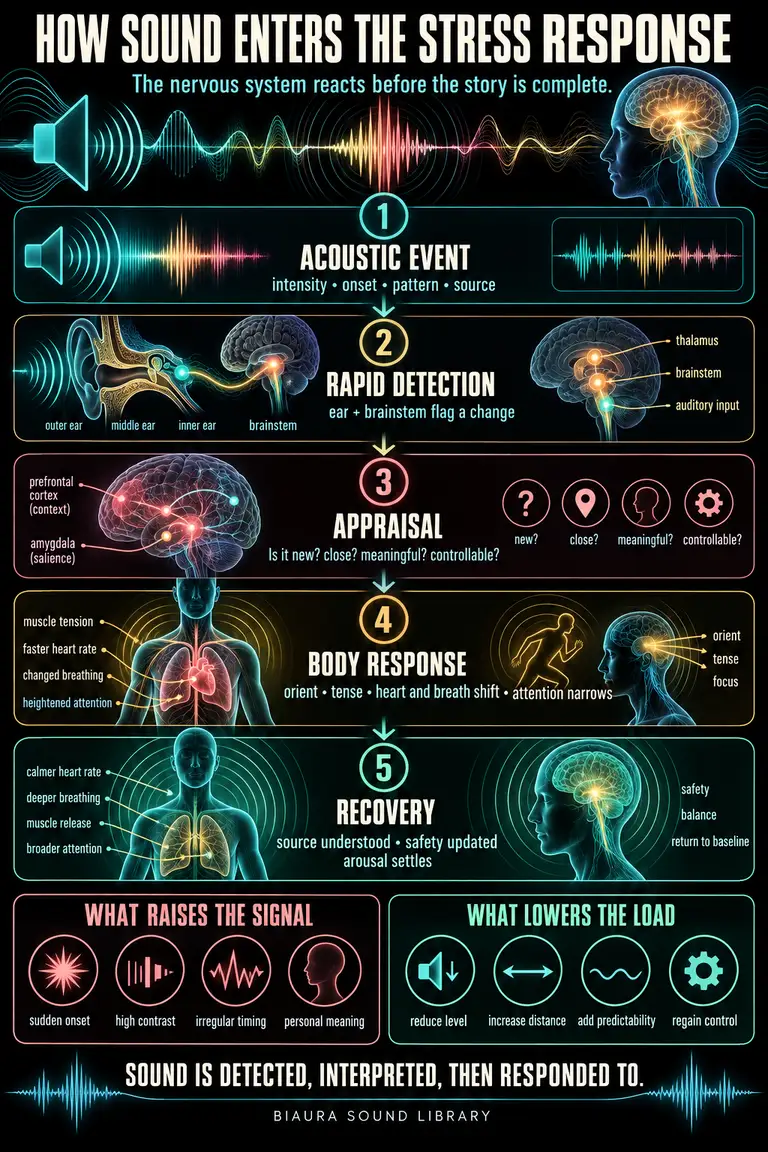
How Sound Enters the Stress Response
Hearing keeps you informed about your surroundings. An unexpected crash may interrupt what you are doing; an unfamiliar hum may keep pulling your attention back. The meaning of a sound matters alongside its acoustic features. In experiments, changing features of environmental recordings changed listeners' emotional judgments. Ma and Thompson's study shows why sound is more than a volume setting.
Begin with the specific problem. If the room is too loud, lower the source or move away. If occasional voices interrupt an otherwise quiet space, a soft, steady background may be worth trying. If added sound feels like another demand, let the pause be quiet. The useful adjustment makes your actual environment easier to occupy.
Startle, Orienting and Sustained Sound Stress Explained
Startle is the quick flinch after an abrupt sound. Orienting is the shift toward a new event, such as turning toward a voice. Sustained strain can involve continuing to monitor an unpleasant environment. These describe different experiences. Experimental research on orienting and startle treats them as related but distinguishable processes.
Use the distinction to troubleshoot. Reduce sharp onsets if abrupt changes bother you. Choose fewer distinct events if you keep following every bird call. Address the source, distance or duration if the whole environment feels tiring.
Why Predictable Sound Feels Different From Random Noise
A recording can have a steady overall level while still containing attention-grabbing details. Compare even rain with the same rain interrupted by close thunder. Listen for sudden entrances, stops, isolated calls and changes in loudness. These are practical clues when a track advertised as relaxing keeps making you look up.
Try a brief comparison where you intend to listen. Keep playback low, then choose between a smooth noise texture and a nature recording with more distinct events. Notice whether you settle into your activity or keep waiting for the next change. Predictability is one preference to explore, alongside texture and personal associations.
Why Having Control Over Sound Can Change the Experience
Choosing a sound is different from having it imposed on you. Research using noise and performance pressure has found that controllability can affect how stress relates to subsequent task performance. Effects depend on the conditions and the person's response. Henderson and colleagues' experiments examine that distinction.
Put the basic controls within easy reach. Decide when playback begins, how long you want it, and what you will do if it becomes irritating. In a shared room, agree on the sound with the other person. When you try Biaura, start with one selection and leave yourself permission to lower it, change it or stop. Completing a session is less useful than learning what feels comfortable.
Nature Sound and Stress Recovery: What Changes?
Nature recordings are an option to explore. In a study of 40 participants after a mental arithmetic task, skin-conductance recovery tended to be faster with pleasant nature sound than with noisy environments. A heart-rate-variability measure did not show the same effect. Alvarsson, Wiens and Nilsson studied particular recordings and conditions.
Choose a recording you already find pleasant. Try rain, a stream or an ocean texture during a short transition away from work. Keep the level comfortable. Notice whether the recording helps you put the previous activity down, rather than searching for a dramatic bodily change.
How to Pair Slow Breathing With a Sound Anchor
Let a continuous sound give you somewhere to return your attention while breathing comfortably. You can notice an ocean swell or rain without synchronizing every breath to it. Keep breathing easy; skip holds or forced deep breaths if they make you uncomfortable. The sound provides a point of attention, not a performance target.
Controlled-breathing research has reported changes in mood and physiological arousal, including a trial of brief daily practices. Balban and colleagues describe the trial. Try a quiet minute, return to ordinary breathing, and compare the experience with the same pause in silence.
Match a Sound Texture to Your Current Arousal Level
First name the experience you have now: wound up, scattered, sleepy or reasonably settled. Then choose a modest direction for the next activity. Someone feeling overloaded might prefer a soft, even background. Someone feeling sluggish might prefer more movement in an ambient recording.
Make one adjustment at a time. Change the texture before increasing volume, and notice how it feels. If a detailed forest keeps drawing your attention away from reading, choose a simpler sound. If a pure tone feels insistent during a pause, try rain. You are selecting a workable environment for this moment; the same choice does not have to suit the whole day.
Build a Five-Minute Sound Downshift
Use five minutes as a convenient container for a pause. Spend the first minute putting down the previous task and choosing a comfortable position. Start a familiar sound quietly. For the next few minutes, notice one detail, such as the even texture of rain, while allowing your breathing to remain natural. When attention wanders, return without keeping score.
Use the final minute to notice the room again and decide what comes next. You might stand up, drink water or begin another task. Adapt this routine to the time you have. Biaura can provide the sound; the transition also comes from giving the activity a beginning and an end.
Use Sound to Mark Daily Transitions
Attach the sound to a specific change in your day: finishing work, arriving home or beginning an evening reading period. Choose a cue you can repeat without much setup. A short rain session after closing the laptop may be easier to maintain than a complicated sequence of frequencies and settings.
Keep the cue distinct from endless background playback. Start it when the transition begins, then deliberately move into your next activity. If you work and relax in the same room, combine the sound with a visible change such as clearing the desk or moving to another chair. Notice whether the whole sequence feels useful. You can keep the routine on days when you prefer silence.
Create a Personal Calm-Sound Map
Make a small reference with four columns: situation, sound, comfortable setup and what you noticed. An entry might read: after a commute, stream, speaker across the room, easier to sit for a few minutes. Another could say: late evening, silence, phone put away, less distracted. Record choices that failed as well as ones you want to repeat.
Review the map after several uses. Look for patterns in event density, brightness and setting. Use Biaura's sound library to revisit a promising texture. Explore sound and mood and comfortable listening habits for related choices.