What frequency is best for focus?
Published by VoidWorks Pte. Ltd.Last updated:
Compare a comfortable sound with silence during similar work, and judge the result by what you finish and understand rather than the frequency label.
Biaura offers binaural beats, pure tones, noise and ambient sounds for everyday listening. Use stereo headphones for beats, or a speaker for noise and ambient playback.
What do 16 Hz, 24 Hz, and 40 Hz map to?
They are the work cards.
Focus uses a 16 Hz beat, Mental Boost 24 Hz and Narrow Focus 40 Hz. These numbers describe the difference between the two carrier tones.
The carrier is the audible pitch of the tones. Where the player offers pitch adjustment, choose a comfortable setting and keep the volume low. Changing the carrier does not change the difference between the tones, which sets the binaural beat rate.
Participants, comparison sounds, listening duration and outcome measures matter. Some studies report benefits and others do not. Source.
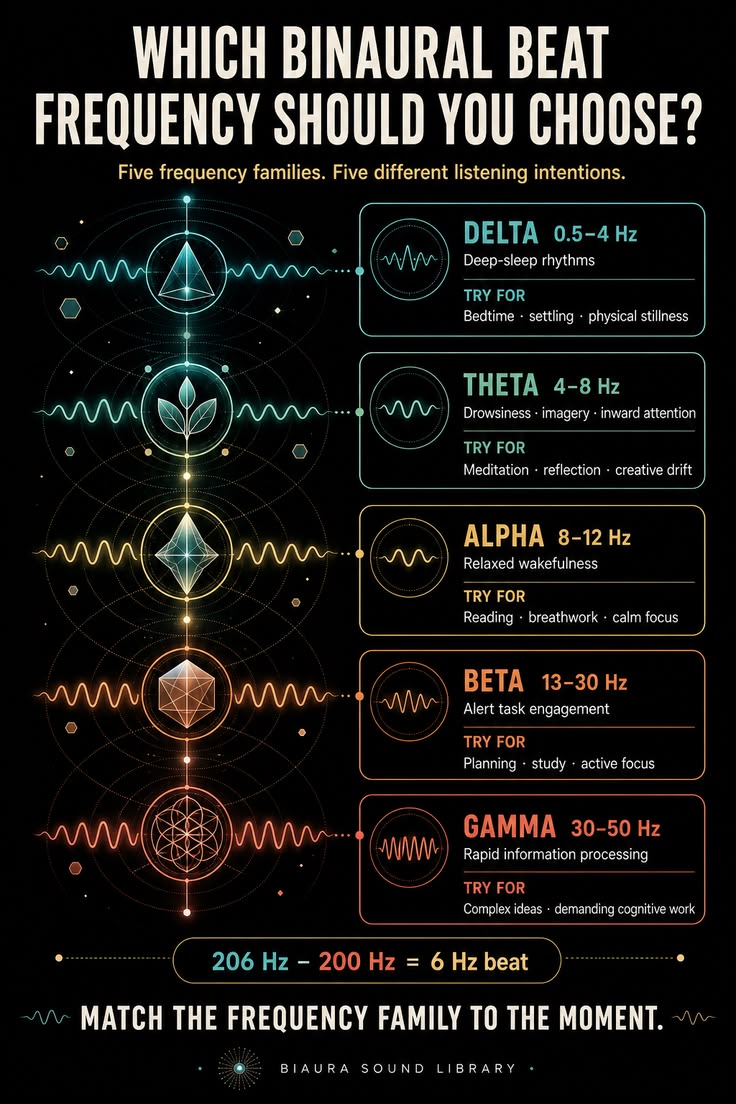
How binaural beats work covers the split between the pulse you hear and stronger claims about EEG.
Why is there no single best frequency?
The task and the room both matter. Reading requires room for words; repetitive work may tolerate a more varied background. Comfort also differs between listeners. A useful comparison keeps the task similar and changes one listening condition at a time.
A 2019 meta-analysis combined studies of cognition, anxiety and pain and found an association between exposure time and outcomes. Source.
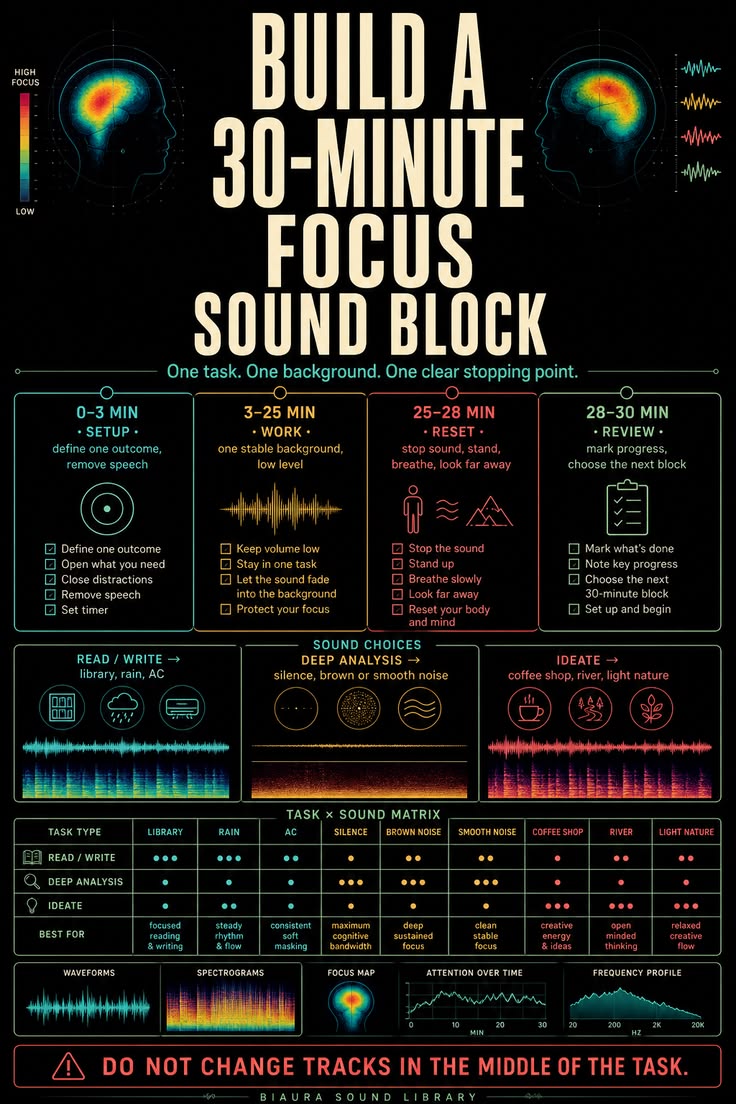
Try one small piece of work with a comfortable sound, then a comparable piece in quiet. Note completed work, errors and understanding. If the sound feels tense, sleepy or distracting, lower it or choose quiet; you do not need to move to a higher frequency.
Do you need headphones for focus beats?
Use stereo headphones for binaural beats so each ear receives its own channel. Room speakers let both ears hear both tones and do not reliably preserve that separation. A phone under a pillow does not solve this. Noise, pure tones and ambient sounds can be played through a speaker.
If you will not wear headphones, do not use a beat. Use white, pink, brown, or green on speakers. That is a mask for the hallway, not a 16 Hz pulse. See white, pink, and brown.
How long should a focus block last?
Start with a brief, comfortable session and assess whether it helps your activity. A short trial can be useful in its own right. Stop or take a quiet break if listening becomes distracting or uncomfortable.
What if the room is the problem?
Sound masking adds a background that can make an interruption less distinct; it does not remove the original sound or soundproof a room. Try reducing the source first, then compare a quiet texture from your listening position. Keep alarms and necessary conversation audible, and stop if the background becomes the problem.
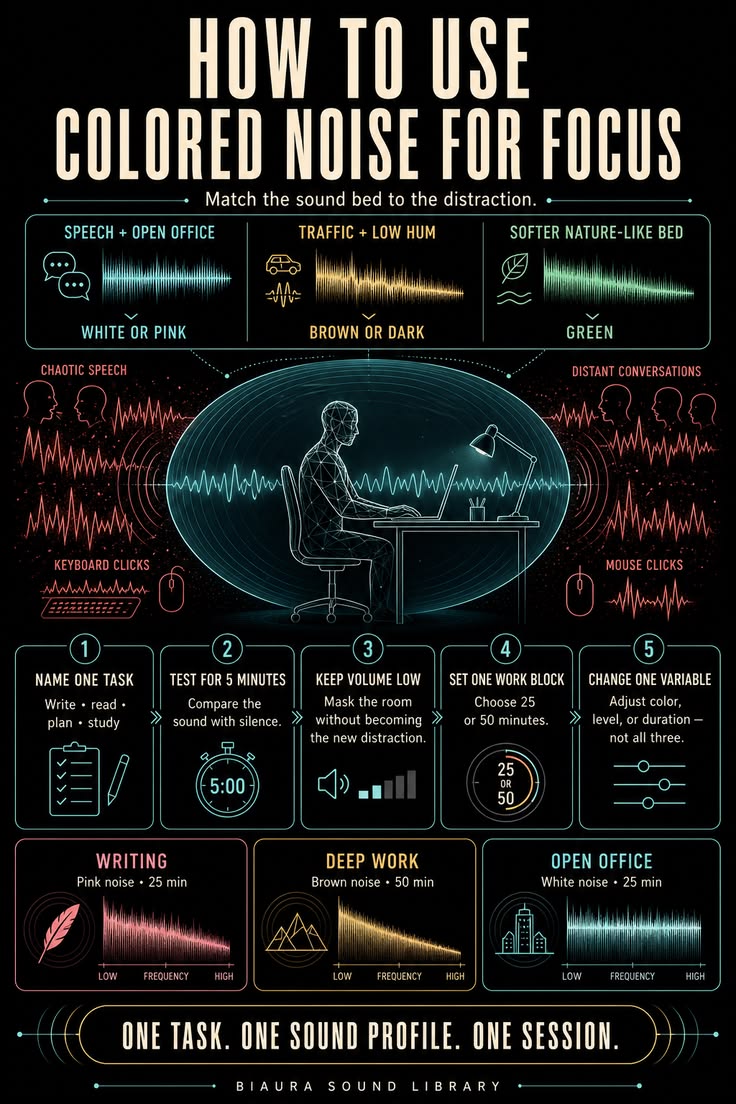
White noise is brighter; pink has less high-frequency emphasis; brown sounds deeper on suitable speakers. Green noise is a less standardized label, so compare the actual recording. Keep the background quiet enough that it does not become a new distraction.
You cannot stack brown under Focus. One sound. If the room is competing, pick the noise. If your attention is competing and the room is quiet, pick Focus.
How do you run a work block in Biaura?
Choose one task, select a sound and check its level. Set the available timer to fit the work you intend to do, then put the phone aside. When you stop, note whether the sound helped you stay with the task; save the setup only if you want to repeat it. Focus
Free to download, with optional Premium features. Check the current offer in the app.
Save the combo to My Presets when it is worth replaying. iOS 15.1 or later, Apple silicon Mac, visionOS. Catalog numbers live on the sounds page. Night cards live on Sleep and binaural beats for sleep. More setup is on the FAQ.
Common questions
What frequency is best for focus?
Compare a comfortable sound with silence during similar work, and judge the result by what you finish and understand rather than the frequency label.
Do I need headphones to focus with binaural beats?
Use stereo headphones for binaural beats so each ear receives its own channel. Room speakers let both ears hear both tones and do not reliably preserve that separation. A phone under a pillow does not solve this. Noise, pure tones and ambient sounds can be played through a speaker.
How long should a focus session last?
Start with a brief, comfortable session and assess whether it helps your activity. A short trial can be useful in its own right. Stop or take a quiet break if listening becomes distracting or uncomfortable.
Should I use beats or brown noise to focus?
Choose noise when you want a broad background around interruptions. Choose a binaural beat if you enjoy the two-tone listening experience and can use stereo headphones. Quiet remains an option.